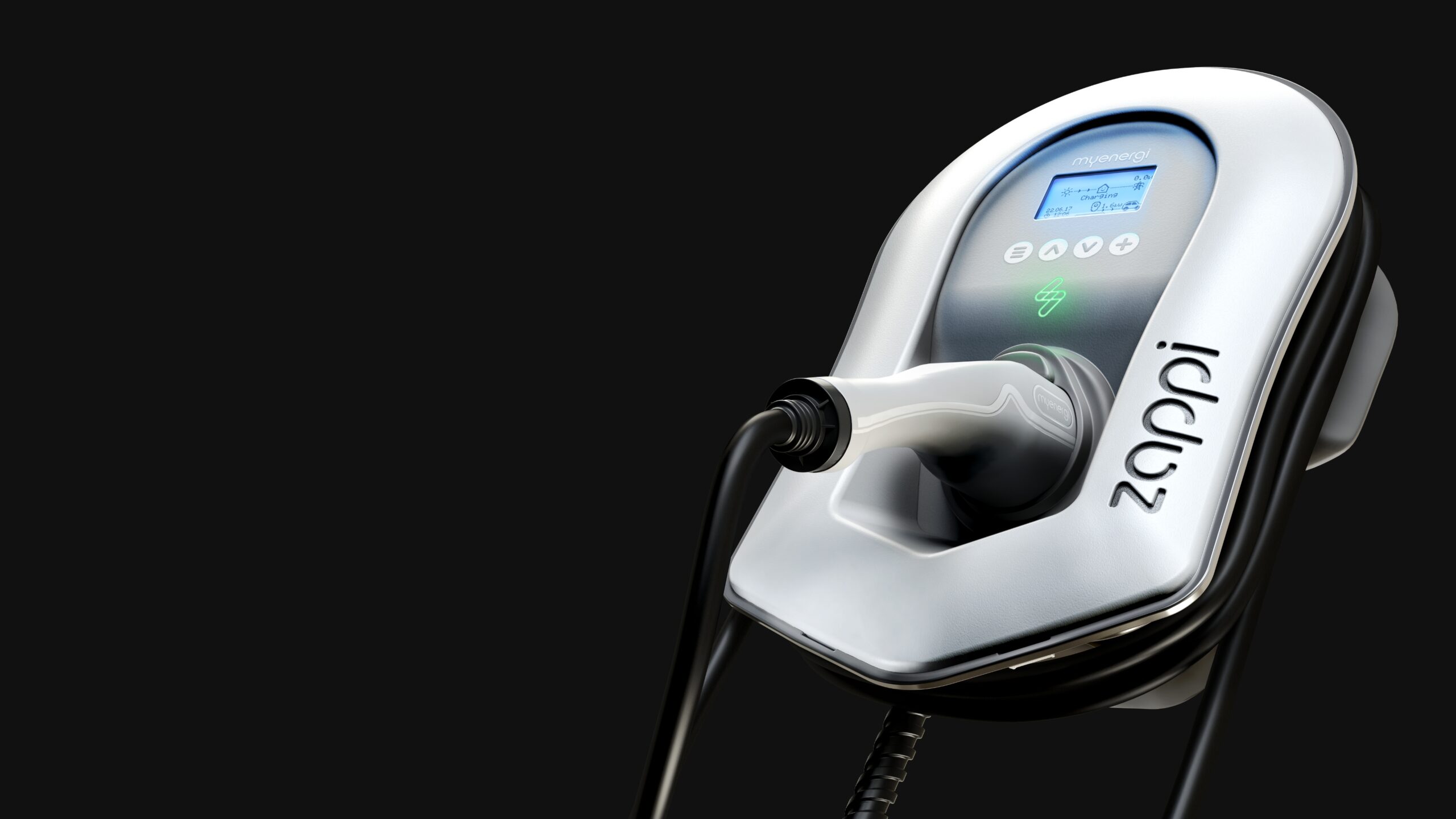
Load management, and why it matters so much
Every building has a limit on how much electricity it can draw at once. It is
set by the incoming supply — the cable from the street and the fuse on the
end of it — and it was decided years ago based on what the building was
then. Add four 7kW chargers to a small commercial supply and the sums stop
working: if all four ran flat out at the same time as the lighting, the heating
and everything else, you would be over the limit and the main fuse would go.
The obvious answer is to buy a bigger supply. That means an application to the
network operator, possibly a new cable, possibly a transformer, and a bill that
runs well into five figures and a wait measured in months. It is sometimes the
right answer. It is very often not.
Load management is the alternative. A controller measures what
the whole building is drawing, in real time, and tells the chargers how much they
are allowed between them. When the building is busy the chargers ease off. When
the offices empty at six, they take what is left. Every car still charges; they
simply share what is spare instead of each demanding a full 7kW the moment it is
plugged in.
For a fleet it works even better, because the vehicles are usually plugged in all
night and only need to be full by morning. There are ten or twelve hours to move
the energy in, so the controller can feed them in turn without anybody noticing.
The result is that a yard which "could not have chargers without a supply
upgrade" very often can.
Load management is
A live measurement of what the building is using, and chargers that share
whatever headroom is left. It protects the main fuse, it is designed round
your actual supply, and it usually removes the need for a supply upgrade.
Load management is not
A slower charger. Nothing is throttled while there is capacity to spare, and
overnight there almost always is. It is also not the same as an app that
lets you set a timer — a timer knows nothing about the rest of the
building.
Grants that are actually still open
We are an OZEV-authorised installer, which is what the current
government chargepoint schemes require before a claim can be made at all. Two of
them are relevant to the work on this page:
The EV chargepoint grant for flats and rental properties puts
money towards sockets at a block of flats or a rented home — it is claimed
by the landlord, the freeholder or the managing agent rather than the resident,
and it is the reason communal parking installs are worth looking at now. The
Workplace Charging Scheme does the same for a business
installing sockets for staff and fleet at its own premises.
Where a property or a workplace qualifies, we handle the paperwork. We are not
going to guess your eligibility on a web page: the rules and the amounts change,
and both schemes are run to their own conditions. Tell us what the property is
and we will tell you where you stand. For an owner-occupied house with its own
driveway there is currently no chargepoint grant — we would rather say that
plainly than let you find out later.
The words on your quote
- 7kW
- The normal home charger. A 32A single-phase circuit.
It adds roughly 25–30 miles of range an hour, which means a full charge
overnight for almost anybody.
- 22kW
- Three-phase charging. Three times the supply, so
three times the speed — but only if the building has a three-phase supply
and the car can actually take it. Many cannot.
- Single / three phase
- How many live cables come in. Most
houses have one. Commercial and industrial premises usually have three, which
is what makes faster and multiple charging possible.
- Tethered / untethered
- Whether the lead is attached.
Tethered is more convenient day to day; untethered is a socket you plug your own
cable into, and it suits shared and public parking better.
- Load management
- Chargers sharing the supply. Also sold as
load balancing or dynamic load management. Same idea: measure the building,
share what is spare.
- Solar diversion
- Charging on your own generation. The
charger watches your meter and uses the electricity you would otherwise export,
rather than buying it back later.
- DNO
- Distribution Network Operator. The company that owns
the cables in your street. Not your supplier. Chargers get notified to it, and
larger ones need its agreement first.
- PEN fault protection
- A safety function built into the
charger. It watches for a specific fault on the incoming supply and
disconnects. It is what removes the need for an earth rod on most modern
installations.
- OZEV
- Office for Zero Emission Vehicles. The government
body behind the chargepoint grant schemes. Its schemes require an authorised
installer, which we are.
Can your house take one?
Nearly always, yes — but it is worth checking rather than assuming, and it
takes us one visit. Three things decide it. First, the incoming supply: most
modern houses have enough for a 7kW charger alongside a shower and an oven, and
where it is tight the charger can be set to work within what is there. Second,
the consumer unit, which needs a spare way and the right protective device; an
older board sometimes needs replacing, and if it does we will price that
separately rather than hiding it in the total. Third, the earthing arrangement,
which is what the charger's own PEN fault protection is usually there to solve.
If the answer is that your board or supply needs work first, that is an
electrical job in its own right, and it is set out on our
electrical
and data installations page.
What you get at the end
An EV charge point is a new circuit, so the work is certificated like any other
electrical installation: you get an electrical installation certificate covering
the circuit and the test results behind it. With it come the manufacturer's
documentation for the unit and, where it applies, the DNO notification reference.
Keep all of it — an insurer, a buyer's surveyor or the next contractor will
ask. On a commercial site the certificates and next due dates can sit in the CJS
client portal alongside the rest of your compliance record, which is set out on
our
maintenance
and compliance page.