Panels on the roof doing nothing, or a roof with nothing on it? Call 029 2068 9339

A CJS Electrical van outside a customer's house with solar panels on the roof, an engineer talking to the customer on the drive.

Service 05 / 06 Renewable energy

Solar Panel Installers in Cardiff & South Wales

Roof-mounted solar PV on houses, larger arrays on commercial and industrial buildings, and battery storage either alongside a new system or retrofitted to one you already have. We are MCS certified for solar PV and battery storage and registered with RECC, we service and repair systems other companies installed, and we make the grid notification and the export application ourselves so you are actually paid for what you send back.

Working to

  • MCS — PV & battery
  • RECC registered
  • NICEIC Approved
  • TrustMark
  • G98 / G99 handled
  • Since 1987

01 Scope

What we install, and what we look after.

Six kinds of job, from a south-facing house roof to an industrial unit with an acre of steel above it. The same engineers do all of it, and the electrical work behind the panels is done by an electrical contractor rather than a panel fitter who subcontracts the wiring.

The six jobs we are asked for

Domestic · Commercial · Battery · Repairs · Cleaning · Bird proofing

01

Domestic solar PV

Roof-mounted panels on a house: the array laid out around the chimney, the vents and whatever the roof actually does rather than as a rectangle on a drawing. Inverter sited where it can be got at, a new circuit back to the board, generation metering and the isolators labelled so the next person knows what they are looking at.

Solar panel installers · Cardiff & South Wales

02

Commercial & industrial solar PV

Larger roof arrays on commercial and industrial buildings — warehouses, units, offices, agricultural buildings. Roof loading and fixings agreed with whoever owns the structure, three-phase inverters, cable routes that do not fight the plant already up there, and the work phased so the building keeps trading.

Commercial solar PV · South Wales

03

Battery storage

Batteries fitted alongside a new array, or retrofitted to solar you already have. It holds what you generate in the middle of the day until you want it in the evening, and on the right tariff it can be filled overnight instead. Our MCS certification covers battery storage as well as solar PV, so both sides are certificated properly.

Battery storage installation · Cardiff · Retrofit or new

04

Servicing, repairs & fault-finding

Systems that have stopped generating, inverters that have failed, isolators that have corroded, monitoring that stopped reporting years ago. We take on systems other companies installed, including ones whose installer is no longer trading, and we replace inverters as well as repair them. There is a whole section on this further down.

Solar panel repairs · South Wales · Any installer

05

Solar panel cleaning

Panel cleaning is delivered through an approved partner. We do not clean panels ourselves; we arrange it with a firm that does, and we can put it in alongside a service visit so somebody looks at the electrical side at the same time. Dirt, moss and lichen on the low edge of an array are a real cause of under-performance.

Through an approved partner · Not carried out in-house

06

Bird proofing existing arrays

Mesh clipped around the perimeter of an array to keep pigeons and gulls out of the gap between the panels and the tiles. Once they nest under there you get droppings down the roof, blocked gutters, chewed cable and a smell in the loft. It is a retrofit job on systems already installed, ours or anybody else's.

Existing arrays · Mesh & clips · Any installer

Equipment we install

Brands we fit · Not tied to one make

01

Enphase

Microinverters and battery storage. Instead of one inverter for the whole array, each panel gets its own, so a shaded or failed panel takes itself out of the sum rather than dragging a whole string down. It also means per-panel monitoring, which makes fault-finding a great deal quicker later on.

Microinverters · Battery storage · Per-panel monitoring

02

SMA Sunny Boy

String inverters from SMA, and one of the longest-standing ranges on UK roofs. We fit them on new work and we replace a lot of them on systems installed by others — an inverter is the part of a solar installation most likely to need changing during the life of the panels.

String inverters · New installs & replacements

03

Solax

Hybrid inverters and batteries from one manufacturer, which keeps the solar and the storage talking to each other and gives you one app rather than two. A sensible choice on domestic work where battery storage is going in at the same time as the panels.

Hybrid inverters · Battery · Domestic

04

Sigenergy

Modular inverter and battery equipment, stacked to the size of the job and added to later rather than replaced. It suits a customer who wants to start with solar and a small battery and grow the storage as their usage changes, and it scales up into commercial work.

Modular · Expandable storage · Domestic & commercial

05

Panels, mounting & isolation

Panels, rails, clamps, roof anchors, DC isolators and surge protection are specified to the roof and to the array rather than bought as a kit. On a commercial roof the fixing method is agreed with whoever is responsible for the structure and the weathering before anything is drilled.

Specified per roof · Fixings agreed first

06

Not tied to one make

If your specification names a manufacturer, or you already have equipment on the roof and want the next part to match it, we will fit that. Where the choice is open we will tell you what suits the roof, the shading and how the building actually uses electricity, and why.

Your specification · Or our recommendation

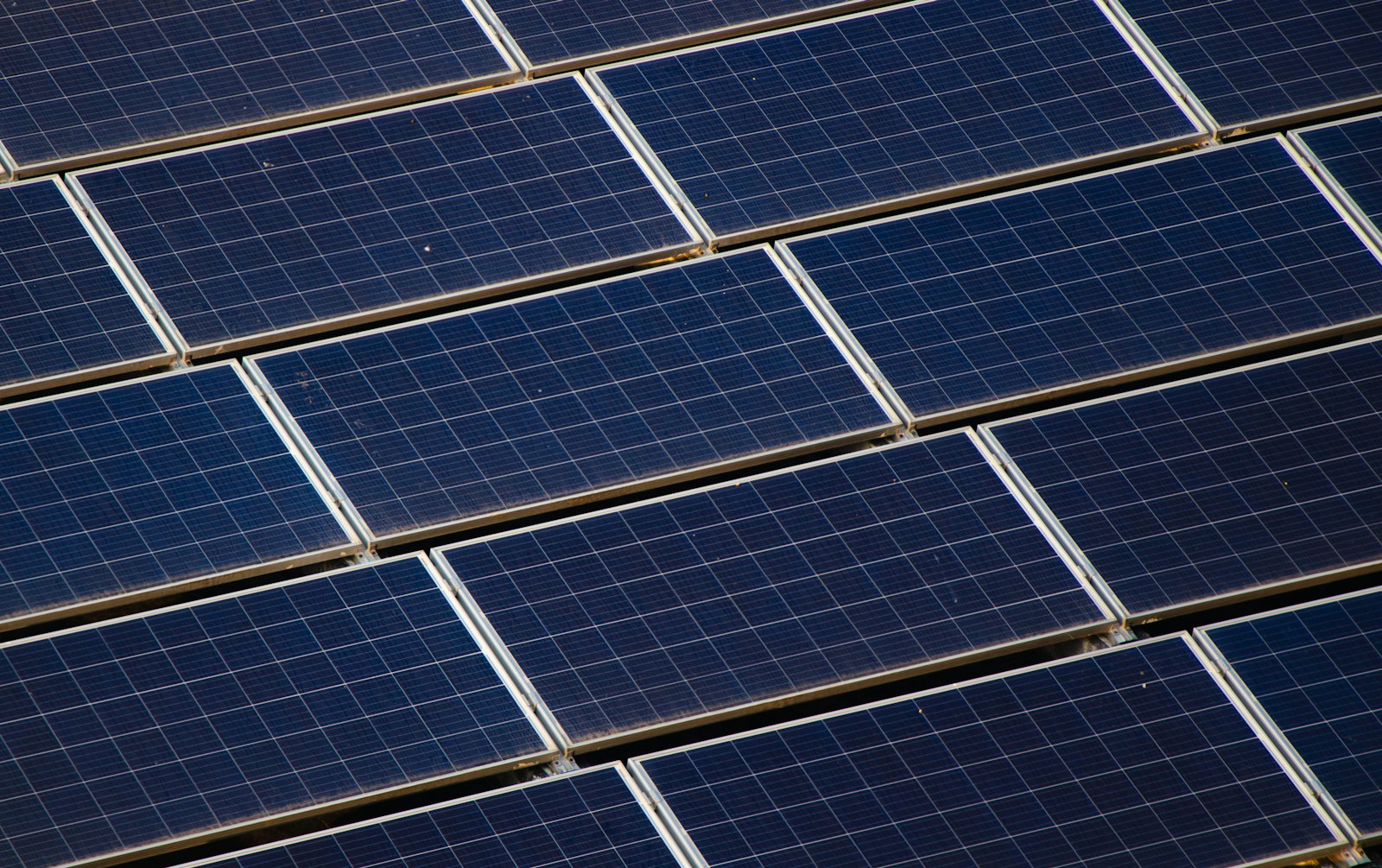
A large solar panel array installed across a commercial building roof.

02 Who it's for

A house roof, or an acre of warehouse.

Half of this work is a homeowner who has had enough of the standing charge. The other half is a business that has worked out it uses most of its electricity in daylight and has a roof doing nothing. Both get the same engineers and the same certificates.

01

Homeowners

A roof array, with or without a battery, designed round what your house actually uses and when. We will tell you honestly if your roof is the wrong shape, the wrong aspect or too shaded to be worth it, at the survey rather than after the scaffold is up.

02

Businesses with roof space

Solar for business in Wales usually stacks up on daytime usage: offices, workshops, cold stores and anything running plant through the working day are consuming exactly when the roof is generating. That is the case we model, from your own half-hourly consumption where you can get it.

03

Industrial units & manufacturers

Big single-storey roofs, three-phase supplies and a standing load. The constraints are usually structural and electrical rather than commercial — what the roof will carry, what the incoming supply and the network operator will accept, and where the inverters can live.

04

Landlords & housing associations

Arrays across a group of properties, and the paperwork that goes with them. We already work for housing associations across South Wales on maintenance and compliance, so surveys, RAMS, resident notice and DBS-checked engineers are the way we work anyway.

05

People who already have panels

Adding a battery to an existing array, replacing a failed inverter, getting a system generating again, or bird proofing an array the birds have found. We take on systems other companies installed, including where the original installer has gone.

06

Farms & agricultural buildings

Barn and shed roofs with a large area and a load underneath them — ventilation, milking, refrigeration, workshop. We work in the agricultural sector already, and the electrical side of a farm is rarely as simple as a domestic install.

Certification

MCS — solar PV and battery storage

Certified to install both to a government-backed standard. MCS certification is also what makes a system eligible for export payments at all.

Consumer code

RECC registered

The Renewable Energy Consumer Code sets rules for how we quote you, what we may claim about performance, and how a dispute gets resolved if one arises.

Handled for you

G98 or G99, and the export application

We notify or apply to the network operator, and we make the export application, so you are paid for what you send back instead of giving it away.

As standard

RAMS before we start

Risk assessments and method statements are produced as standard on commercial work, and issued to you before the first visit. Working at height is the whole job here.

In-house

Our own engineers

Our own directly employed engineers do the electrical work. Non-electrical trades such as scaffolding and roofing may be brought in where a job needs them.

03 How it works

How an installation actually runs.

Six stages, and the first one costs you nothing. Nothing is ordered until you have a written price, the network operator is dealt with by us, and the job is not finished until your MCS certificate is issued and your export application is in.

01

Survey: the roof, the shading and the meter cupboard

We come out and look at the building. Which way the roof faces and how steeply it pitches, what shades it and at what time of day, what the covering and the timbers are, where the inverter and any battery can live, what the incoming supply is and what the board has spare. On a commercial building we ask for your consumption data as well. The visit is free.

Free site survey · Roof and supply checked · No obligation

02

Design and a written quote, modelled on your building

The array is laid out on your roof, not a standard one, and the generation is modelled from the orientation, the pitch, the shading and how much of it you will use on site rather than export. You get the equipment, the layout, the electrical work and any roofing or scaffolding priced in writing, with the options set out rather than kept in our heads.

Modelled per building · Written quote · Free

03

We deal with the network operator, and the export application

Generation has to be declared to the company that owns the cables in the street. A domestic-scale system is normally a G98 notification; larger and three-phase systems normally need a G99 application and the operator's agreement before anything is connected. We make whichever submission applies, chase it, and put in the export application afterwards.

G98 or G99 · Export application · Submitted by us

04

Installation, with the roof put back properly

Scaffold or access up, anchors fitted to the timbers or the purlins, rails set out, panels on, DC run in conduit rather than clipped to the felt, inverter and any battery mounted where they can be serviced, and the AC side back to the board with its own protection. The roof is left weathertight, and we tell occupants or staff what is happening before we start.

Access planned · Roof left weathertight · Occupied sites phased

05

Commissioning and handover

The array is tested string by string, the protective devices are proved rather than assumed, and the system is commissioned and set to work. Then we go through it with you: how to read the monitoring, what the isolators do, how to shut it down in an emergency, and what to expect the thing to do across a year rather than on the day we happen to hand it over.

Tested · Commissioned · Monitoring set up with you

06

MCS certification and your paperwork

The installation is registered and your MCS certificate is issued, along with the electrical installation certificate, the handover pack and the manufacturers' documentation. Keep all of it: your energy supplier will want the MCS certificate before it will pay you for export, and a buyer's surveyor will ask for it years later.

MCS certificate · Electrical certificate · Handover pack

If you want a price for an installation

The survey and the quote are free.

Home or commercial, one roof or a portfolio. We come out, look at the roof and the supply, model it on your building and put a written price in front of you. No charge and no obligation — and if the honest answer is that your roof is not worth doing, we will say that instead.

If a system has already stopped working

Fault call-outs are chargeable.

Fault-finding on an existing installation is chargeable, and we will say so before we come. Out-of-hours and 24-hour call-outs are available at our discretion — call 029 2068 9339 and we will do our best.

04 Grid & export

G98, G99 and getting paid for your export.

Anything that generates electricity has to be declared to the company that owns the cables in the street, and a separate application is what gets you paid for the electricity you do not use. Two pieces of paperwork that people either dread or never find out about. We do both.

01

What G98 actually is

G98 is the engineering rule that covers small generation — domestic-scale solar, and batteries that can push power back out. Under it, a system can be connected first and the network operator told afterwards, inside the window the rules allow. It is a notification, not a request: we fill it in and send it.

Small generation · Notified after connection

02

What G99 actually is

G99 is the same idea for anything bigger — most commercial arrays, three-phase systems and larger battery installations. It is an application, and the operator has to agree before the system is connected. Sometimes it comes back with a condition attached, such as limiting what the site may export. We handle the application and explain any condition in plain terms.

Larger & three-phase · Agreement needed first

03

The Smart Export Guarantee

The SEG is the arrangement under which an electricity supplier pays you for the units you export instead of taking them for nothing. It is not automatic and it is not part of your normal bill: somebody has to apply, with your MCS certificate and your G98 or G99 evidence attached. Rates differ between suppliers and you can apply to one you do not buy from.

MCS certificate required · Export paid, not given away

04

We fill it in and we chase it

We work out which route your system takes, gather what the operator asks for, submit it, follow it up and tell you where it has got to. Then we make the export application with the certificates attached. You are not handed a folder and a link and left to work out which form belongs to whom.

Submitted by us · Chased by us

We deal with the same network operators on EV charging work, where a charge point has to be notified or applied for in much the same way. If you are putting in generation and charging together, it is one conversation with the operator rather than two. How we handle the DNO on EV work

05 Servicing & repairs

We will look after a system we did not fit.

A lot of solar went on roofs across South Wales a decade or more ago, and a lot of the firms that fitted it are no longer there. Panels last. Inverters, isolators, connectors and monitoring do not always. We take those systems on, whoever installed them.

01

It has stopped generating

The commonest call we get. It might be the inverter, a tripped protective device, a failed DC isolator, a water-damaged connector on the roof, or a string that has gone open circuit. We test rather than guess: strings measured, insulation resistance checked, the inverter's own fault log read, and you get told what it is and what it costs before anything is ordered.

Solar panel repairs · South Wales · Fault-finding

02

Inverter replacement

An inverter is the part of a solar installation most likely to need replacing during the life of the panels, and the original model is often long out of production. We size and fit a current replacement to the array you already have, re-commission it and reconnect the monitoring, rather than telling you the whole system needs doing again.

Like-for-like or upgraded · Array kept · Monitoring reconnected

03

Systems other companies installed

We do not mind whose name is on it. Bring us a system with no paperwork, no monitoring login and an installer who has gone, and we will inspect it, test it, tell you what condition it is in and what it needs, and take it on from there. On commercial sites that includes putting the missing records back together.

Takeover · Original installer gone · Records rebuilt

04

Planned servicing

A periodic look at the things that quietly degrade: fixings and clamps, DC isolators, connectors and cable ties, the inverter's readings against what the array should be doing, earthing and surge protection, and the monitoring actually reporting. We put it on a service contract with an agreed visit frequency, so the visits happen without you chasing them. Commercial sites can have it scheduled alongside the rest of their electrical maintenance.

Service contract · Agreed frequency · Domestic & commercial

05

Panel cleaning, through an approved partner

Panel cleaning is delivered through an approved partner — we arrange it, they carry it out. We do not clean panels in-house. Moss, lichen and traffic film build up along the bottom edge of an array and shade the cells there, and a shaded cell drags on the string it sits in. Worth doing before anyone starts hunting for an electrical fault.

Arranged by us · Carried out by an approved partner

06

Bird proofing

Mesh clipped to the panel frames around the edge of an existing array, closing the gap between panel and tile so pigeons and gulls cannot nest in it. Done as a retrofit on systems already up, ours or anybody else's, and usually while access is already in place for something else.

Existing arrays · Retrofit · Any installer

On a commercial site, solar servicing sits alongside the rest of your electrical compliance rather than being a separate arrangement with a separate firm — the same scheduled visits, the same records, the same client portal. Maintenance & compliance

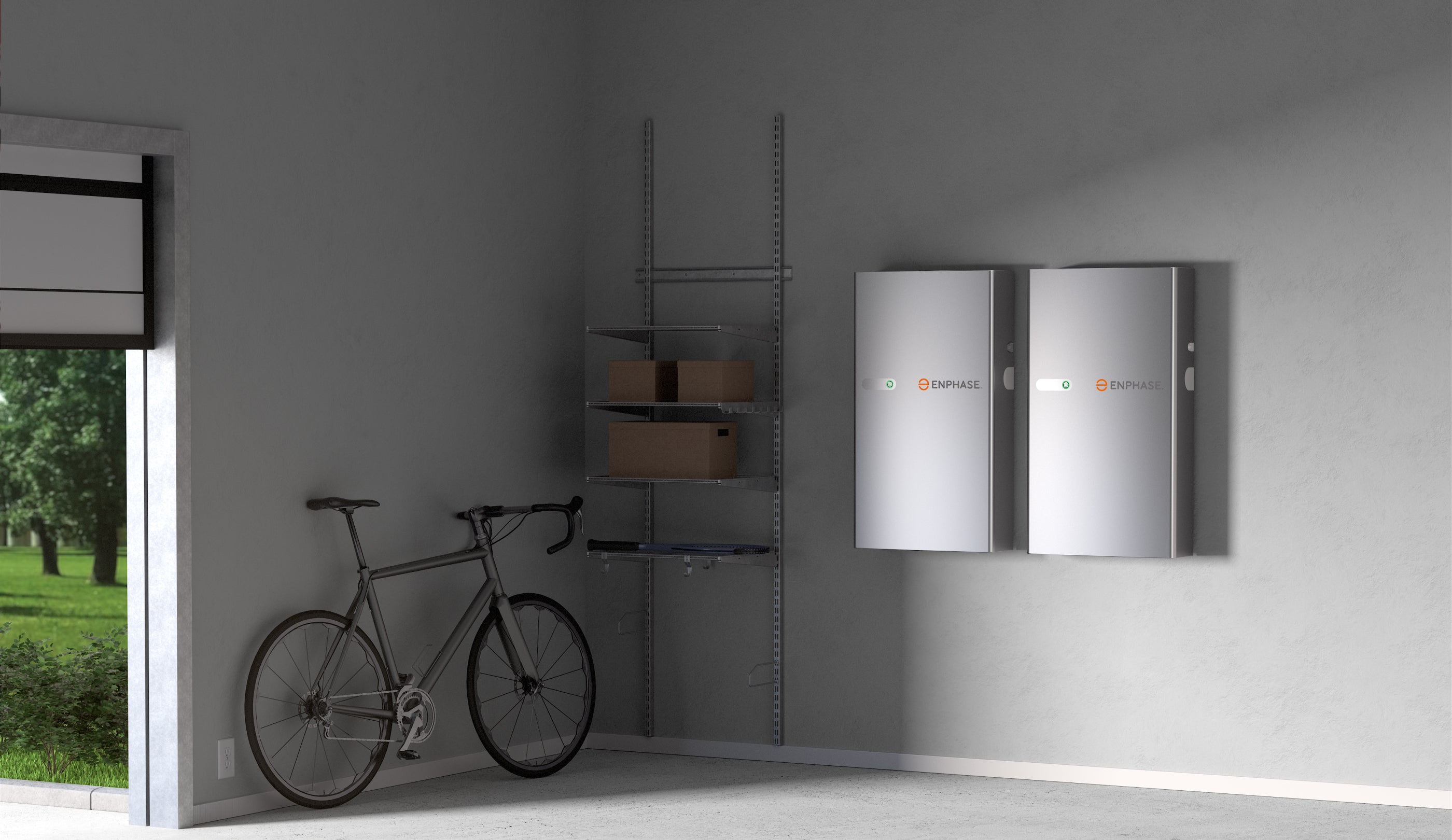
Wall-mounted battery storage units installed in a garage.

06 Solar + EV

Put the roof into the car.

The best thing you can do with electricity you have generated is use it yourself, and a car is the biggest thing most people own that will take it. We install solar, storage and EV charging, so the three get designed as one job instead of three.

01

Surplus goes in the car, not out to the grid

On a bright day a house with panels makes more than it is using and sends the rest back. A charger that watches the meter can put that surplus into the car instead. Export earns you something; using it yourself is worth more, which is the whole argument for pairing the two.

Solar diversion · Export used, not sold

02

One design, not two

Panels, inverter, battery and charger share the same board, the same earthing and the same incoming supply. Designed together that is straightforward. Designed by two firms who never spoke, it is where the arguments start — usually over what the supply can take.

One contractor · One set of certificates

03

Battery in between

A battery lets the sun you caught at midday charge the car at midnight, or lets you fill up on a cheap overnight rate and use it the next day. Our MCS certification covers solar PV and battery storage, so both sides are certificated properly.

MCS · Solar PV & battery storage

04

Commercial roofs, commercial fleets

The same logic scales: a warehouse roof generating through the working day and a yard full of vans that plug in at the end of it. Generation on site reduces what the chargers draw from the network, which is often what makes the charging workable without a supply upgrade.

Workplace · Fleet · Rooftop generation

Chargers that divert surplus generation into the car, load management on a site with several points, and the network operator paperwork for both are all set out on the EV charging page. EV charger installation

07 Plain English

MCS, RECC, and how payback is worked out.

Solar is sold with a lot of certainty that nobody actually has. Here is what the badges mean for you, and how the sums are really built — including why we will not put a number on this page.

What MCS actually means for you

The Microgeneration Certification Scheme is the government-backed standard for small renewable installations. It covers both the products and the company installing them, and it is assessed rather than self-declared. We are certified under it for solar PV and for battery storage, which matters because plenty of firms hold it for one and not the other.

Two practical consequences. First, your installation is registered and you get an MCS certificate for it — a document your insurer, your mortgage lender and the surveyor acting for a future buyer will all recognise. Second, and this is the one people find out about too late: MCS certification is what makes a system eligible for export payments. An energy supplier will ask for that certificate before it will pay you a penny for what you send back. A system installed by an uncertified firm generates perfectly well and earns you nothing for its export.

What RECC actually means for you

The Renewable Energy Consumer Code is the consumer protection code that sits alongside MCS. We are registered with it, and it is written for your benefit rather than ours. It governs how we may sell to you: what has to be in a written quote, that you must not be pressured into signing, that you get a cooling-off period, how deposits are handled, and what happens to your contract if the company fails part-way through.

The part most relevant to this page is that RECC governs what any of us may claim about performance. A member firm may not wave a generic figure at you; an estimate has to be produced for your building, by a defined method, and given to you in writing with its assumptions attached. If a company shows you a confident number before it has seen your roof, that tells you something. RECC also gives you an independent route to complain and to have a dispute settled, which is worth more than any promise made in a kitchen.

What we will tell you

What your roof can carry and how the array would be laid out, what the modelling says for your building on your usage, what it costs, what the paperwork involves, and where the uncertainty sits. In writing, with the assumptions shown.

What we will not tell you

A payback period, a saving or a percentage on a web page. We have not seen your roof, your bills or your tariff. Anybody quoting you those things before a survey is quoting somebody else's house.

How payback is actually worked out

Payback is a sum, and every term in it belongs to your building. It is worth knowing what goes into it, because it explains why two houses in the same street get different answers.

Which way the roof faces, and how steeply. Aspect and pitch set the shape of the generation across the day and across the year. South is the textbook answer, but an east-and-west split roof generates in the morning and the evening, which can suit a household that is out at midday better than a south face would.

What shades it, and when. A chimney, a dormer, a neighbour's conifer, the flue on the unit next door. Shading is not a flat deduction: it moves through the day and through the seasons, and where it falls on a string matters as much as how much of it there is. This is one of the reasons we look at per-panel equipment on awkward roofs.

How much of the generation you actually use on site. This is the term that decides most cases and the one most often glossed over. Electricity you use yourself displaces electricity you would have bought at your import rate. Electricity you export earns you the export rate instead, which is a different and smaller thing. A business running plant through the day uses most of what its roof makes; an empty house at midday does not, unless a battery or a car is there to take it.

What you are paying now, and what you would be paid for export. Your current tariff, your standing charge and the export rate you can get all go into the sum, and all of them move. That is precisely why a number printed on a web page in one year is misleading in the next.

What the installation costs, and what it needs over its life. The equipment and the electrical work, plus scaffolding or access, plus any roofing or board work the building needs first — and the honest expectation that an inverter is likely to be replaced at some point while the panels carry on.

We model all of that for your building, from your own consumption where you can get it — half-hourly data from your supplier or your meter for a commercial site, bills and a conversation about how the house is used for a domestic one. The answer comes with the survey and the written quote, for your roof, with the assumptions written down beside it so you can argue with them. It does not come from a web page, and we would rather tell you a roof is not worth doing than sell you one that is not.

The words on your quote

PV
Photovoltaic. Panels that turn daylight straight into electricity. Not solar thermal, which is a different technology for heating water and is not what this page is about.
Inverter
The box that makes it usable. Panels produce DC; your building runs on AC. The inverter converts it, and it is the part most likely to need replacing during the life of an array.
String / microinverter
Two ways of wiring an array. A string puts panels in series into one inverter, so the weakest panel affects the rest. Microinverters give each panel its own, which suits shaded and awkward roofs.
Hybrid inverter
One box for solar and battery. It handles the array and the storage together rather than bolting a second system on beside it, which keeps the wiring and the monitoring simpler.
kWp
Kilowatt peak. The size of an array under standard test conditions. It is a label for comparing systems, not a promise about what your roof will do on a given day.
Self-consumption
The share of what you generate that you use yourself. The single biggest lever on whether a system stacks up, and the reason batteries and EV chargers change the sums.
Export
What you send back to the grid. Metered separately and paid for under an export arrangement — but only if somebody applies for one, and only with an MCS certificate.
SEG
Smart Export Guarantee. The scheme under which licensed electricity suppliers pay for exported units. Rates vary between suppliers, and you can be paid by one supplier while buying from another.
G98 / G99
The grid connection rules. G98 for small generation, notified after connection; G99 for larger, applied for and agreed before. We submit whichever applies.
DNO
Distribution Network Operator. The company that owns the cables in your street. Not your supplier. Generation is notified or applied for to them, and for most of South Wales that is National Grid Electricity Distribution.
MCS
Microgeneration Certification Scheme. The standard for the products and the installer. Your certificate under it is what makes the system eligible for export payments.
RECC
Renewable Energy Consumer Code. The consumer code governing how renewables are sold, what may be claimed about performance, and how disputes are resolved.

Is your roof any good?

Most are workable, and the ones that are not are usually obvious once somebody has stood in the garden and looked. Four things decide it. The aspect and pitch. The shading, and when it falls. The roof itself — covering, condition and what the timbers or purlins will carry, because a roof that needs work is better done before an array goes on it than after. And the electrical side: what the incoming supply is, what the board has spare, and where an inverter and a battery can sensibly live.

If the building needs board or supply work before an array can go on, that is an electrical job in its own right, and it is set out on our electrical and data installations page.

What you get at the end

A solar installation is a new generating circuit bolted to your building, so it is certificated like any other electrical work and then some. You get the electrical installation certificate and the test results behind it, the MCS certificate for the installation, the manufacturers' documentation and warranties for the equipment, the G98 or G99 evidence, and the export application. On a commercial site the certificates and the next service dates can sit in the CJS client portal alongside the rest of your compliance record, which is set out on our maintenance and compliance page.

08 Why CJS

Why put it through us.

Solar brought a lot of firms into the trade quickly, and took a lot of them out again just as fast. It is worth knowing that the company bolting a generating system to your roof was an electrical contractor first, and is still here to service it.

Certification

MCS certified solar installer

Certified for solar PV and for battery storage — both, not one. It is also the certification that makes your system eligible for export payments.

Consumer code

RECC registered

The renewables consumer code: written quotes, no pressure selling, protected deposits, and an independent route to resolve a dispute if one arises.

Accreditation

NICEIC Approved Contractor

Assessed against BS 7671, the UK wiring regulations, by the leading certification body for the industry — on all our electrical work, not just the solar.

Sign-off

A Qualified Supervisor signs the testing

Inspection and testing is signed off by a Qualified Supervisor. Your certificates carry a named, accountable signature.

Insurance

£10m public, £10m employer's liability

Cover of £10m public liability and £10m employer's liability. Certificates are available on request.

Track record

Family-run since 1987

Nearly four decades working across Wales — commercial, industrial, agricultural, education, social housing and domestic. Still here to service what we fit, and what others fitted.

CJS Electrical vehicles parked outside the yard in Cardiff.

09 Questions

Solar and battery questions.

Yes, for both. Our MCS certification covers solar PV and battery storage, which is worth checking with anybody you speak to because a good many firms hold it for one and not the other. MCS is the government-backed standard covering the products and the company installing them, and it is assessed rather than self-declared. It matters to you for two reasons. Your installation is registered and you get an MCS certificate that your insurer, your lender and a future buyer's surveyor will recognise. And MCS certification is what makes the system eligible for export payments at all — an energy supplier will want to see that certificate before it will pay you for anything you send back to the grid. We are also registered with RECC, the renewable energy consumer code, and we are a NICEIC Approved Contractor and TrustMark registered.

We do, both of them. Anything that generates has to be declared to your Distribution Network Operator, which is the company that owns the cables and the substation in your street rather than the supplier you buy electricity from. For most of South Wales that is National Grid Electricity Distribution. A domestic-scale system is normally a G98 notification, which we submit after the system is connected. Larger, three-phase and bigger battery installations normally need a G99 application, which has to be made and agreed before anything is connected, and can come back with a condition attached such as a limit on what the site may export. Getting paid is separate: the Smart Export Guarantee is an arrangement with an electricity supplier, it is not automatic, and it needs an application with your MCS certificate and your grid paperwork attached. We make that application too. Rates differ between suppliers, and you can be paid by one supplier while buying your electricity from another.

We will not answer that on a web page, and we would be wary of anyone who does. The honest answer is that it is a calculation belonging to your building, and every term in it is yours: which way the roof faces and how steeply it pitches, what shades it and at what time of day, how much of the generation you actually use on site rather than export, the tariff and standing charge you are paying now, the export rate you can get, and what the installation costs including any access, roofing or board work your building needs first. The term that decides most cases is how much you use yourself, because electricity you use displaces electricity you would have bought, while electricity you export earns the export rate instead. We model all of it for your building, from your own consumption data where you can get it, and the answer comes with the survey and the written quote with its assumptions written down beside it. We are registered with RECC, whose consumer code requires exactly that: an estimate produced for your property by a defined method, in writing, rather than a confident number waved at you before anyone has seen the roof.

Yes, and it is a large part of what we are asked for. Retrofitting storage to an existing array is a different job from installing both together: we need to know what inverter you have and whether it can work with a battery, whether it makes more sense to add AC-coupled storage beside it or to replace the inverter with a hybrid one, what the board and the incoming supply will take, and where the battery can be sited safely. We survey it and put the options in writing with the costs against them rather than pushing you at one answer. Adding storage also has to be declared to the network operator, because a battery can push power back out just as panels can, and we handle that notification or application as part of the job. Our MCS certification covers battery storage as well as solar PV. We also fit battery storage on its own, with no solar at all — worth doing if you are on a tariff with cheaper overnight rates, since the battery charges when power is cheap and carries you through the expensive part of the day.

Yes. We service, repair and fault-find on systems other companies installed, including where the original installer is no longer trading, and we do not mind whose name is on the inverter. We test rather than guess: strings measured, insulation resistance checked, protective devices and DC isolators inspected, connectors on the roof looked at and the inverter's own fault log read. The commonest causes are a failed inverter, a corroded or water-damaged DC isolator or connector, a tripped device nobody noticed, or a string that has gone open circuit. You are told what it is and what it costs before anything is ordered. Where the inverter has failed and the original model is out of production — which is usual on an older system — we size and fit a current replacement to the array you already have, re-commission it and get the monitoring reporting again, rather than telling you the whole system needs doing over. Fault call-outs are chargeable and we will say so before we come out.

Panel cleaning we deliver through an approved partner: we arrange it and they carry it out, rather than doing it in-house. It is worth doing, because moss, lichen and traffic film build up along the bottom edge of an array and shade the cells there, and a shaded cell drags on the whole string it sits in — so a clean is worth ruling in before anyone starts hunting for an electrical fault. Bird proofing we do ourselves: mesh clipped to the panel frames around the perimeter of an existing array, closing the gap between the panels and the tiles so pigeons and gulls cannot nest in it. Once they are in there you get droppings down the roof and into the gutters, chewed cable and a smell in the loft, so it is much better done before they find it. Both are retrofit jobs on systems already installed, ours or anybody else's, and both are cheaper to do while access is already in place for something else.

It depends on when you use electricity rather than on how much roof you have, which is the opposite of what most people assume. A building that runs plant, refrigeration, machinery or a full office through the working day is consuming at exactly the hours the roof is generating, and that is the case that stacks up, because electricity you use yourself displaces electricity you would have bought. A building that is empty in the middle of the day exports most of what it makes, and export is paid at a different and smaller rate. So the first thing we ask a commercial client for is consumption data — half-hourly readings from your supplier or your meter if you can get them — and we model the array against that rather than against a standard profile. The constraints that decide the rest are structural and electrical: what the roof and its fixings will carry, what the incoming supply and the network operator will accept under a G99 application, and where the inverters can be sited. All of that comes back to you in writing after the survey, and the survey is free.

We install Enphase microinverters and battery storage, SMA Sunny Boy inverters, Solax and Sigenergy, and we are not tied to any one of them. In broad terms: Enphase gives each panel its own microinverter, so a shaded or failed panel takes itself out of the sum instead of dragging a string down, and you get monitoring panel by panel, which suits awkward and shaded roofs; SMA Sunny Boy is a long-standing string inverter range that we fit on new work and use a great deal as a replacement on other people's systems; Solax pairs hybrid inverters with its own batteries, which keeps solar and storage on one system and one app; and Sigenergy is modular, so the storage can be added to later rather than replaced as your usage changes. Panels, rails, clamps, roof anchors, DC isolators and surge protection are specified to your roof rather than bought in as a kit. If your specification names a manufacturer, or you already have equipment up there and want the next part to match, we will fit that instead.

10 Free quote

Get a free quote.

Tell us about the roof — or about the system already on it — and we will reply within one working day. The site survey and the written quote cost you nothing, and the modelling behind the quote is done on your building rather than on a standard one.

01 About you
02 The property

UK format, for example CF14 0SH. Automatically capitalised.

A portfolio of properties, or several buildings on one site? Give us your own address here and list the properties in the message — we will set them all up on one account.

03 Property type
Is this a home or a business?
04 What you need
05 Detail

Anything that helps us price it — which way the roof faces, what shades it, roughly when the building uses its electricity, whether there is already an array up there and who fitted it, and anything you know about your supply or consumer unit.

06 Confirm

We never sell your details.

Tick the human check to enable this button.

029 2068 9339 Get a free quote